
When talking about Italian politics, a question often arises for those who come from presidential countries: after all, who governs Italy?
Italy is a parliamentary republic. This means that the center of political life is in Parliament and in the Government that arises from the parliamentary majority. In this system, two figures appear prominently: the President of the Republic and the President of the Council of Ministers.
The President of the Republic, currently Sergio Mattarella, is the Head of State. It represents national unity, ensures institutional balance, enacts laws, appoints the President of the Council, can dissolve the Chambers in foreseen situations and exercises a constitutional guarantee function. It is a figure of stability, continuity and protection of institutions.
The President of the Council of Ministers, currently Giorgia Meloni, is the one who leads the Government. In practice, she is the head of the Executive: she coordinates the ministers, leads the government's political line, presents projects, executes programs and responds politically to Parliament.
Therefore, Italy does not function like Brazil or the United States, where the elected president combines the functions of Head of State and Head of Government. In Italy, these functions are separate. The President of the Republic guards the institutional house. The President of the Council conducts day-to-day government.
For Italians born abroad, understanding this difference helps them to better read news about citizenship, immigration, decrees, reforms and relations with the diaspora. A law can be born by the government, debated in Parliament, promulgated by the President of the Republic and then applied by the public administration, consulates, communities and courts.
Understanding Italy also means understanding its institutions. And this is part of belonging: knowing the country not only through family origins, but through the public life that continues to shape the future of Italians inside and outside Italian territory.
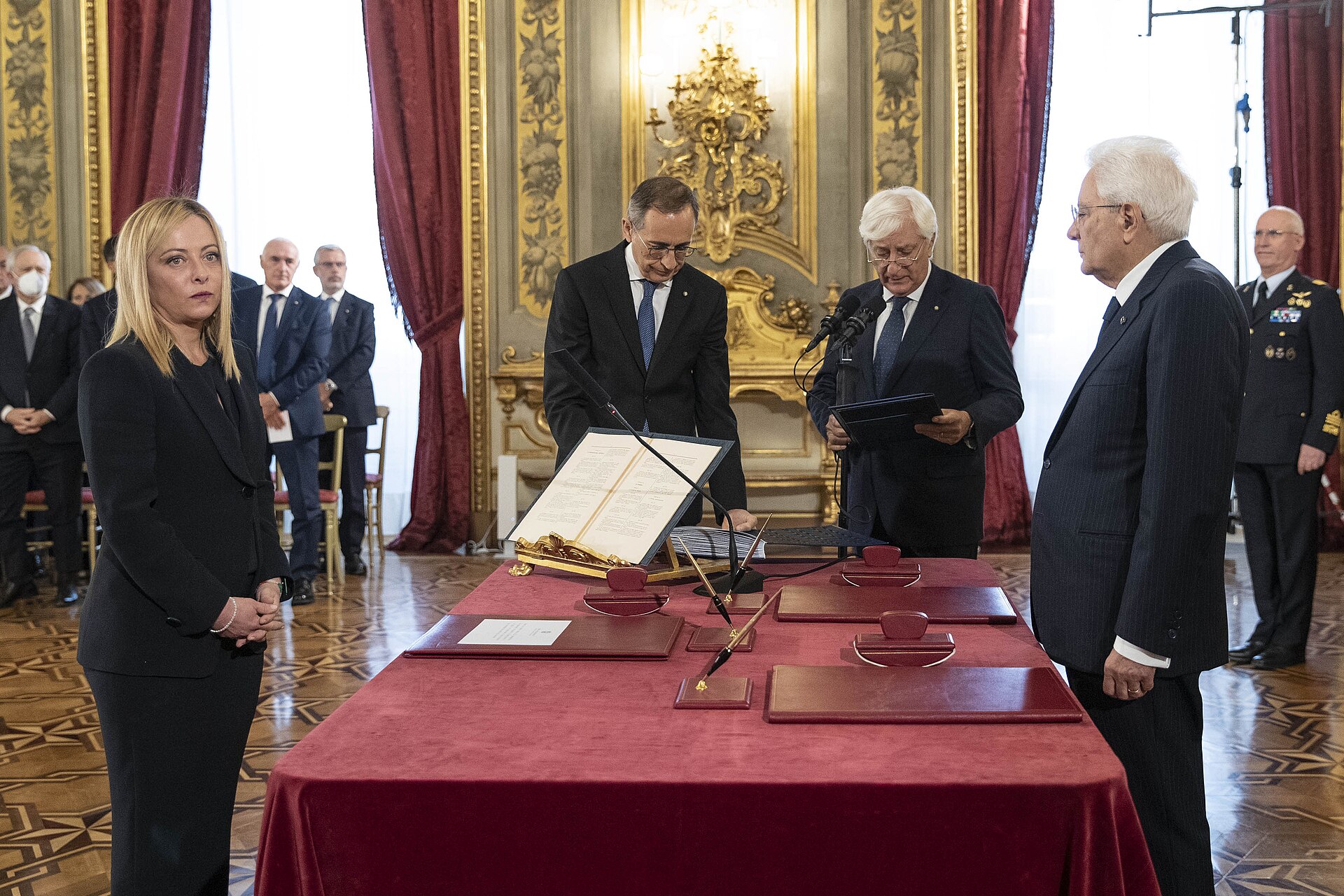
Italy today: President of the Republic and President of the Council
Cristian Marmentini Masiero • 19/05/2026
Source/reference: https://www.quirinale.it/