
Italian immigration was one of the great human movements in modern history. Between the end of the 19th century and the beginning of the 20th century, millions of Italians left their homeland in search of work, security and a future. The departure was not just economic: it involved entire families, kinship networks, political changes, an agricultural crisis and the hope of rebuilding life on another continent.
The Americas received much of this flow. Brazil, Argentina, the United States, Uruguay, Venezuela and Canada have become important destinations. In Europe, France, Switzerland, Germany and Belgium also received Italian workers. In each place, Italians created communities, clubs, churches, newspapers, parties, culinary habits and their own ways of keeping the memory of their origins alive.
This story still has practical effects today. Certificates, civil records, parish documents, shipping lists and family histories are used by many foreign-born Italians to reconstruct their family line and seek recognition of Italian citizenship.
Talking about Italian immigration is talking about courage, loss, adaptation and continuity. Italy crossed the ocean with its children and remained alive in surnames, recipes, ways of working, family ties and in the desire for symbolic or real return.
Italian immigration around the world: a story of departure, work and belonging
Cristian Marmentini Masiero • 18/05/2026
Image credits
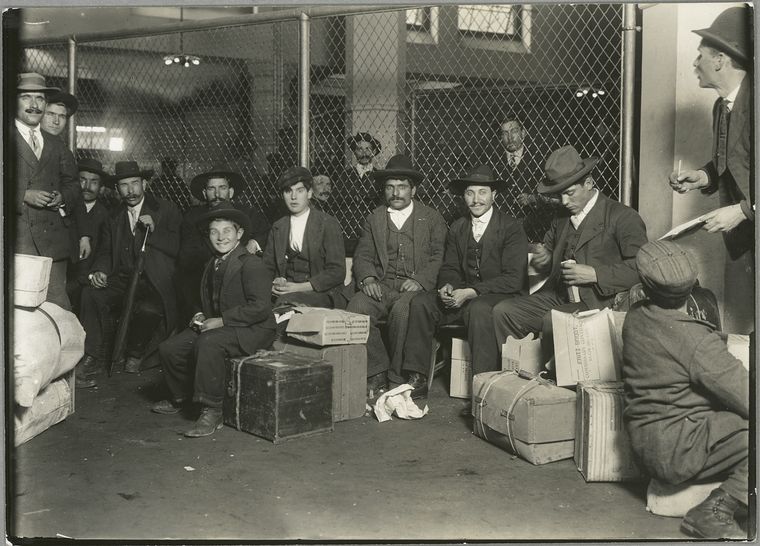
Italian immigrants at Ellis Island in 1908, photographed by Lewis Hine.
Source/reference: https://www.almacidadania.com.br/blog_post.php?slug=imigracao-italiana-no-mundo-a-maior