
The great Italian diaspora
The Italy that crossed the world
Millions of games have transformed families, cities and countries. The Italians took with them regional languages, surnames, devotions, crafts, recipes and a memory that continued to live far beyond the peninsula.
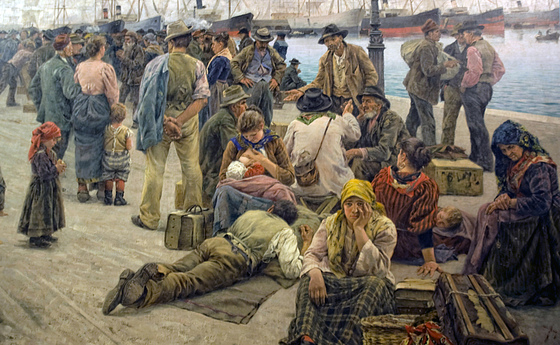
Detail of Gli emigranti (The exit of immigrants), by Angiolo Tomasi, 1896 — Galleria Nazionale d'Arte Moderna e Contemporanea, Rome.Emigration and immigration
The same journey seen from two sides
For Italy, it was emigration: the departure of its population. For Brazil, Argentina, the United States, France, Switzerland and many other destinations, it was immigration. For the families, it was a journey marked by goodbyes, work, adaptation and continuity.
1861–2022
One of the largest migratory movements in modern history
Historical data gathered by the Italian Ministry of Foreign Affairs, based on Istat, illustrates a mobility that spanned different generations and never belonged to a single period.
The Kingdom of Italy is born
Political unification did not eliminate regional inequalities, rural poverty and difficulties in accessing land and work.
The great emigration
More than 14 million matches. Family networks linked Italian communities to ports and communities in Europe and the Americas.
Wars and restrictions
Conflicts, migration policies and the fascist regime altered flows, without ending Italian mobility.
Reconstruction and post-war
More than 7 million departures followed European reconstruction, industrialization and new work arrangements.
A connected diaspora
Associations, families, researchers and Italians born abroad maintain cultural, emotional, legal and economic ties with Italy.
Diaspora routes
Where did the Italians go?
Destinations changed depending on the season. Nearby countries welcomed seasonal and permanent workers; the Americas attracted families in search of land, wages and community networks; the post-war period opened new routes.
Neighborhoods, aid societies, churches, the press, and family jails consolidated large Italian-American communities.
The proximity favored intense flows of workers in construction, industry, services and agriculture.
In Argentina, the Italian presence had a profound impact on everyday language, gastronomy, politics and national identity.
From rural work to urban life, Italian immigration participated in Brazilian agriculture, industrialization, commerce and cultural formation.
Communities grew especially with labor movements and family reunification in the 20th century.
New destinations welcomed Italian families and developed lasting associations, businesses and cultural networks.
The largest immigration current of the period
Italian immigration in Brazil
Between 1870 and 1920, around 1.4 million Italians entered Brazil. They represented 42% of the 3.3 million immigrants received by the country during this period, according to IBGE.
42%of the immigrants who arrived in Brazil between 1870 and 1920 were Italians
The National Landmark of 1874
The Tabacchi Expedition, with almost 400 people on board the ship La Sofia, arrived in Vitória in February 1874 and became the official landmark of subsidized Italian immigration in Brazil.
Coffee, cities and industry
Large contingents initially worked in the coffee plantations. Afterwards, many migrated to urban centers, factories, commerce, services and small family businesses.
Colonies, agriculture and wine
Families occupied agricultural colonies based on small properties. Caxias, Dona Isabel, Conde d'Eu and other areas formed communities with a strong regional identity.
Territory and communities
Colonies and urban centers preserved festivals, religiosity, gastronomy, community societies and immigration languages.
Work and urban life
The Italian presence reached farming, commerce, construction, arts, industry and different circuits of internal mobility.
From colony to Brazilianness
The descendants integrated into Brazilian society without erasing surnames, family memories and their own ways of experiencing Italianity.
Two recent milestones
150 years of presence celebrated in Brazil and RS
The celebrations do not use exactly the same starting point. The national calendar remembers 1874; Rio Grande do Sul takes 1875 as a reference.
1874–2024
150 years of Italian immigration in Brazil
On February 21, 1874, the La Sofia docked in the port of Vitória with around 400 Italians. The date came to symbolize the beginning of the continuous and subsidized flow that would transform Brazilian society.
Discover the national landmark ↗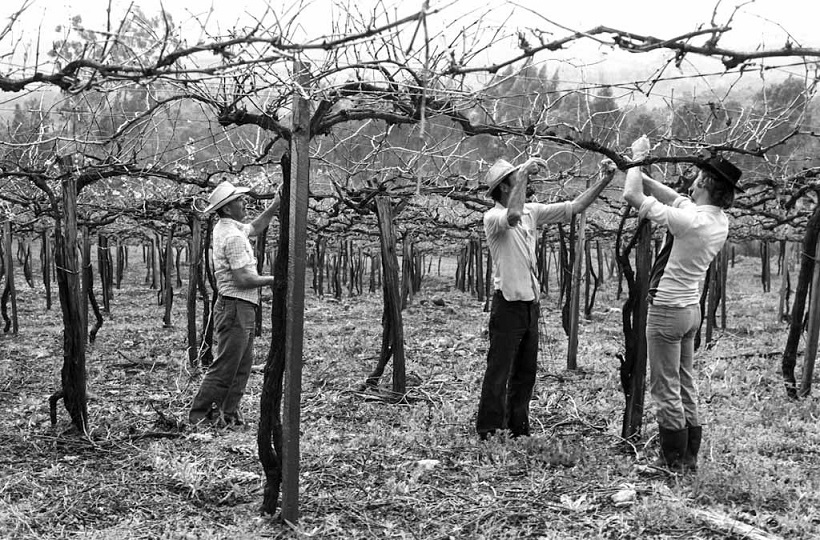
1875–2025
150 years of Italian immigration in Rio Grande do Sul
On May 20, 1875, the first immigrants arrived in Nova Milano, now Farroupilha. Between 1875 and 1914, approximately 84 thousand Italians came to live in the state.
See the memory of 150 years at UCS ↗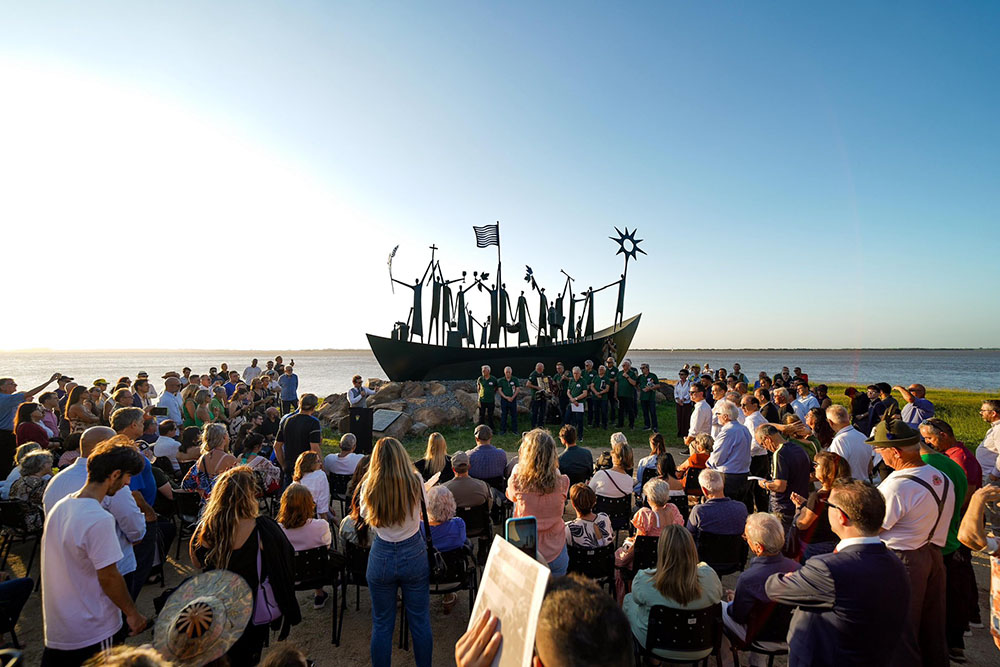
Our history is made of futures
Public memory and community identity
The celebrations brought together universities, archives, museums, city halls, associations, families and communities. More than remembering their arrival, they gave visibility to the heritage built over generations: cultural landscapes, collections, festivals, cooperatives, wine growing, religiosity and regional languages.
Consult the commemorative page of the Government of RS ↗Living heritage
What crossed the ocean
The trip did not only transport labor. She brought ways of speaking, praying, cooking, working, forming a family and belonging to a community.
Family and surnames
Kinship networks guided travel, work, marriages and the formation of new communities.
Regional languages
Veneto, Talian and other varieties survived in family and community orality.
Work and associations
Aid societies, cooperatives, clubs, schools, churches, and newspapers helped organize collective life.
Faith and celebrations
Devotions, processions, patron saints and festivals linked the new territories to their regions of origin.
Gastronomy and agriculture
Recipes, wines, agricultural techniques and family meals have become part of everyday life in destination countries.
Italians born abroad
Children and descendants continue this story through memory, culture, genealogy and ius sanguinis.
Sources and in-depth