
From the origins to the end of the Western Empire
Ancient Rome and the people of the Italian peninsula
Long before unified Italy, the peninsula was inhabited by people with their own languages, cities and traditions. Rome was born in this mosaic, progressively dominated the peninsula and built an empire that connected Europe, North Africa and part of Asia.
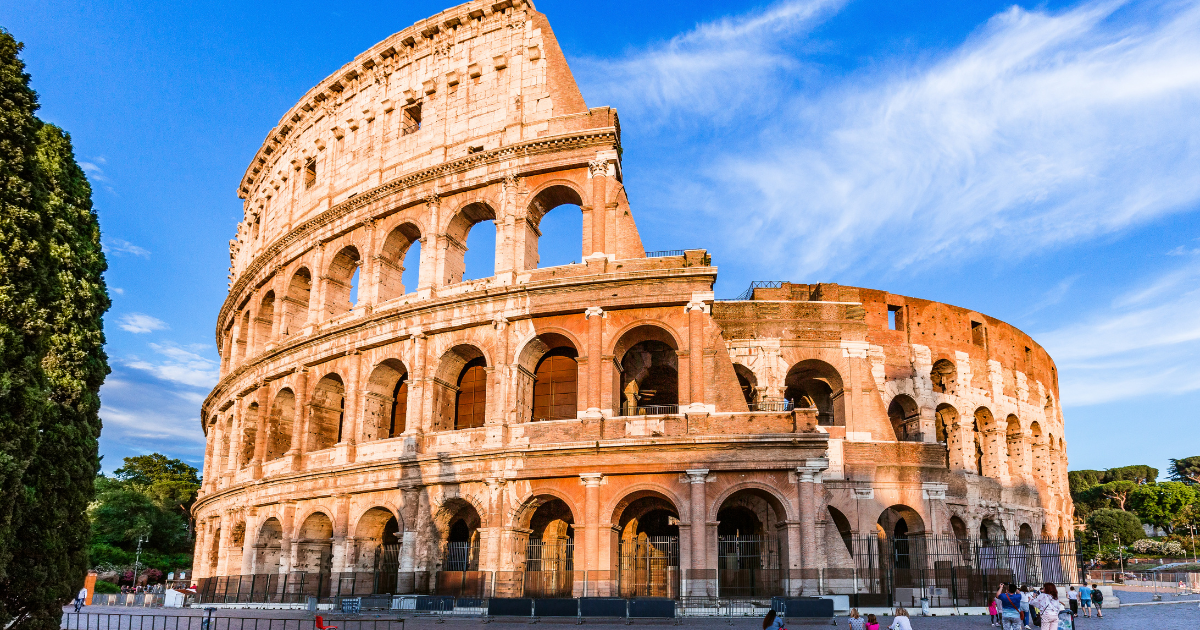
Before Rome's hegemony
The peninsula did not belong to a single people
Between the end of the second millennium and the first centuries of the first millennium BC, different communities occupied the peninsula and the islands. They traded, fought, founded cities and influenced each other.
Therefore, it is more accurate to talk about people who inhabited and controlled different territories, and not in successive rulers of all of Italy. The political unity of the peninsula would be gradually built by Rome.
One territory, many cultures
Who lived on the Italian peninsula
Borders have varied over the centuries. These groups represent some of the most important presences in understanding the formation of the Roman world.
Etruscans
Organized into powerful cities, they mainly occupied Etruria, between present-day Tuscany, Umbria and northern Latium. They profoundly influenced the religion, symbols and urban life of Rome.
Latins and Sabines
Latins formed communities in ancient Latium; Rome emerged in this environment. Roman tradition also attributed a decisive role to the Sabines in the formation of the city.
Samnites and Italic peoples
Samnites, Sabines, Marsians, Vestians, Pelignians, Aequis and Volsci made up a diverse world. The wars against the Samnites were decisive for Roman expansion.
Umbrians and Picenos
They occupied areas of the center and the Adriatic coast. Its territories were progressively incorporated into the Roman sphere during the Republic.
Ligurians, Venetos and Celts
Ligurians were in the northwest, Venetians in the northeast, and Celtic groups, called Gauls by the Romans, occupied large areas of the Po valley.
Greeks of Magna Graecia
Greek colonies flourished on the southern and Sicilian coasts. Cities such as Taranto, Syracuse, Cumae and Neápolis brought language, art, philosophy and urban models to the Italic world.
Daúnios, Peucetios and Messapios
These people of ancient Apulia maintained intense contacts with the Adriatic and the Greek world before Roman incorporation.
Sardinians, Siculus, Sicanos and Phoenicians
The islands preserved their own ancient societies and also received Phoenician and Carthaginian settlements, becoming central spaces in Mediterranean disputes.
Rome before the emperors
From a city in Lazio to a Mediterranean power
The expansion that made the Empire possible happened largely during the Republic. Rome combined war, alliances, colonies, roads and different degrees of citizenship.
Traditional foundation
Roman tradition places the founding of Rome by Romulus in this year. Archeology reveals a gradual process of union of villages around the Tiber.
The Republic is born
The power of kings was replaced by magistracies, the Senate and assemblies, although political participation remained unequal.
Domain of the peninsula
Rome defeats Latins, Etruscans, Samnites and other opponents. After the war against Pyrrhus, he controlled most of the peninsula.
Punic Wars
The victories over Carthage transform Rome into the main power in the western Mediterranean.
Achievements and republican crisis
Domination expands, while inequalities, civil wars and disputes between generals weaken republican institutions.
27 BC–AD 476 in the West
The time of emperors
In 27 BC, Octavian received the title of Augustus. The date conventionally marks the beginning of the Empire, although old republican institutions continued to formally exist.
For centuries, Rome administered provinces, protected trade routes, built roads, aqueducts, ports and cities and spread Roman law and Latin. The empire was also marked by violent conquests, slavery, revolts and disputes for power.
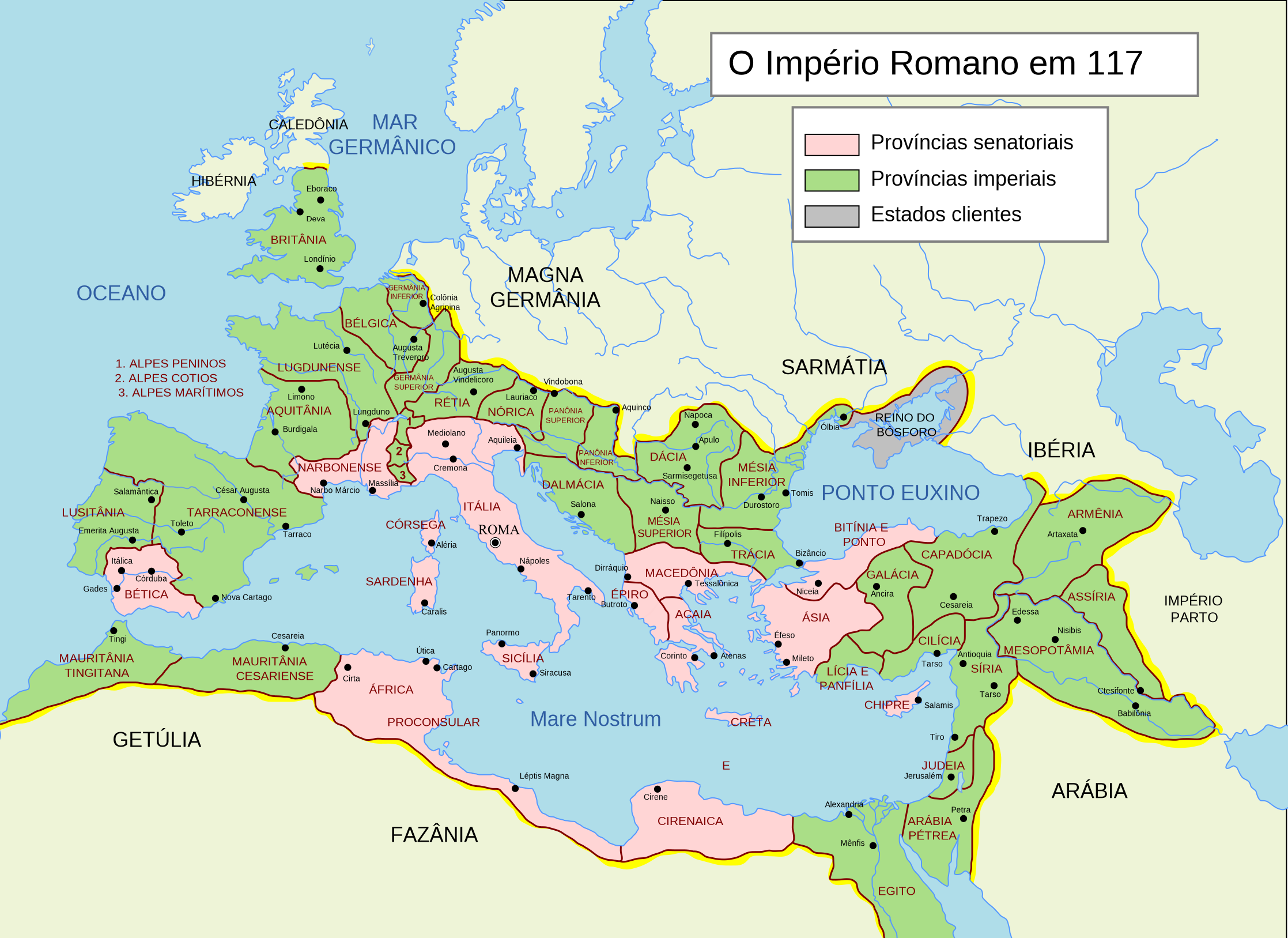
Main imperial landmarks
Emperors who defined eras
Imperial history was not a linear sequence. Dynasties, civil wars, reforms and different centers of power continually transformed Rome.
Augustus
He consolidated the new regime, reorganized provinces and the army and inaugurated a long period of stability.
Trajan
Under his government, the Empire reached its greatest territorial extent.
Adriano
He prioritized the consolidation of borders and covered the provinces widely.
Marcus Aurelius
Emperor and philosopher, he ruled in the midst of border wars and epidemics.
Constantine
He reorganized imperial power, favored Christianity and founded Constantinople as the new capital.
The changing West
Political crises, military pressures and new kingdoms reduced imperial control until the deposition of Rômulo Augústulo.
After Rome
The Empire fell in the West, but Rome remained
The year 476 is a historical convention, not the immediate disappearance of Roman civilization. The Eastern Roman Empire continued for nearly a thousand years, and Roman institutions, cities, and customs spanned the Middle Ages.
Roman legal concepts profoundly influenced European legal traditions.
Italian and other Romance languages were born from Latin.
Roads, bridges, aqueducts, forums and amphitheaters still structure Italian landscapes.
Roman citizenship changed over time and became an instrument of political integration for the Empire.
Religion went from persecution to imperial support and profoundly marked the later history of Rome.
Senate, Republic, Empire and Rome continued as political and cultural references for centuries.