
Pilgrimage, landscape and memory
The Assisi Way and the paths of Saint Francis
Routes connecting nature, towns and Franciscan places, with Assisi as a spiritual and cultural landmark — and a new promotional initiative presented in 2026.
Content checked on 3 November 2026.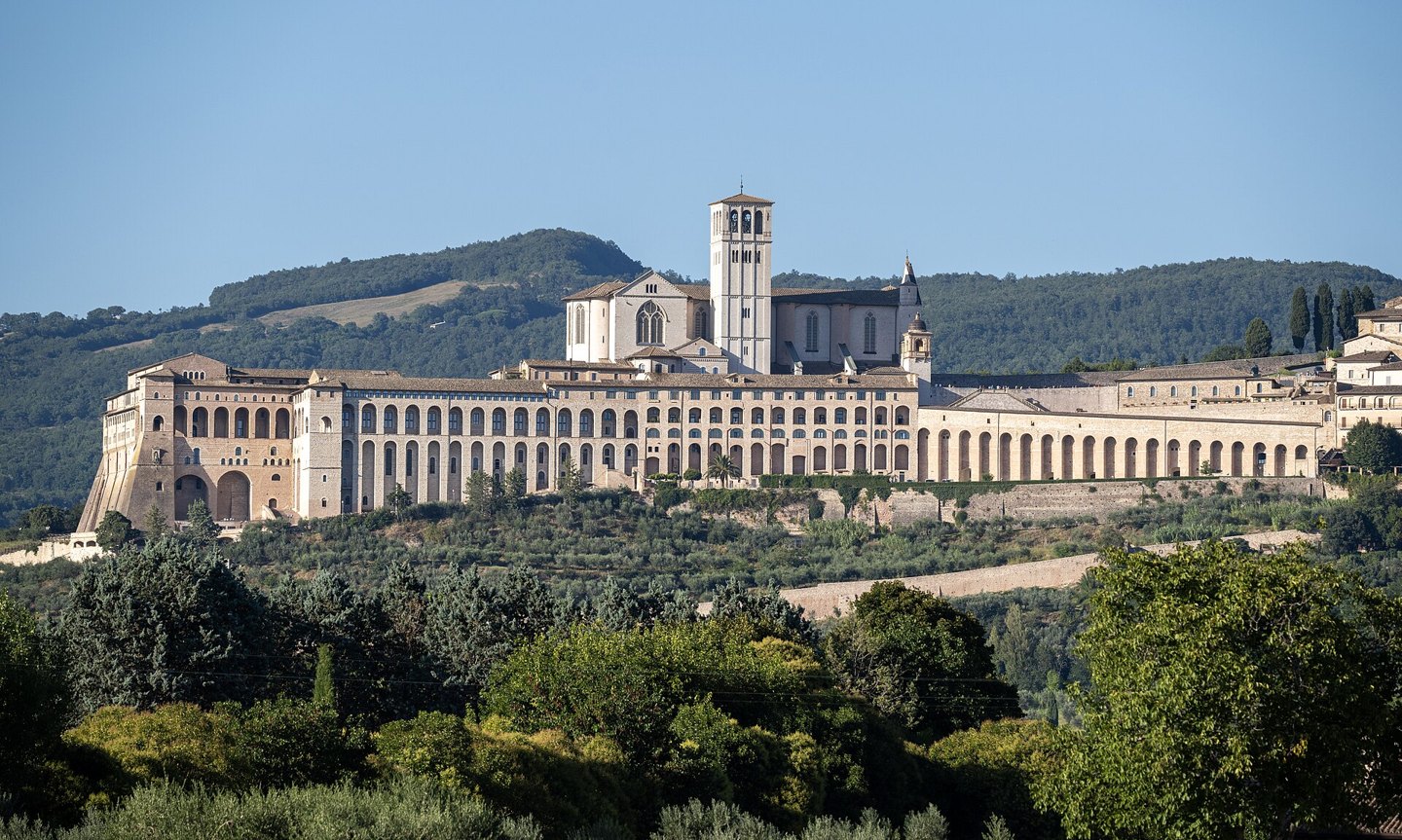
01
What is the Cammino di Assisi?
The Cammino di Assisi is a pilgrimage route from Dovadola in Emilia-Romagna to Assisi in Umbria, also crossing Tuscany. It connects Apennine landscapes and spiritual places associated with Saint Francis and Saint Anthony, including Montepaolo, Camaldoli and La Verna.
It was not created recently: the Foreste Casentinesi National Park dates its beginnings to 2007. Check distances, stages and alternatives with the route’s organisers; its name should not automatically be used for every other Franciscan route.
02
The Via di Francesco and arriving in Assisi
The Via di Francesco offers routes approaching Assisi from the north and south. Its official portal presents northern approaches from Florence, Rimini and La Verna, and a southern approach from Rome. Assisi is home to the Basilica of Saint Francis and other key places for understanding Franciscan history.
These paths introduce walkers to small towns, hermitages, sanctuaries and rural landscapes. The interest may be religious, cultural or recreational: what they share is time to discover the places and their memory.
03
The 2026 development: the Cammino della Luce
On 30 July 2026, the Ministry of Tourism presented “Cammino di Francesco – Il Cammino della Luce”, with an institutional campaign featuring Andrea Bocelli. This is a recent initiative promoting Franciscan routes in the year marking 800 years since Saint Francis’s death (1226–2026).
The launch should be distinguished from the routes that already existed. The official documentation consulted confirms the 2026 presentation; it does not mean that the historic Cammino di Assisi or the whole Via di Francesco was created that year.
04
Discovering and planning the route
Before choosing stages, consult current maps and information on the official portals. Check distances, elevation gain, trail conditions, signage, accommodation and water availability. Mountain sections require preparation and planning for the season.
Credentials, stamps and completion certificates follow the rules of each route and arrival point. Consult the Via di Francesco portal and Assisi’s tourism website to plan a visit, without assuming different itineraries share the same stages or requirements.
Photos and places

Basilica of Saint Francis and Sacro Convento in Assisi.
Credit: Stifone · CC BY-SA 4.0 Image resized and compressed; framing adjusted on the page.
Sanctuary of La Verna, a landmark of the Franciscan routes.
Credit: Mongolo1984 · CC BY-SA 4.0 Image resized and compressed; framing adjusted on the page.
Via di Francesco: a northern route section between Pietralunga and Loreto, in the Gubbio area.
Credit: Mongolo1984 · CC BY-SA 4.0 Image resized and compressed; framing adjusted on the page.Official sources and further reading
Institutional references for checking the information and following updates. Links may open pages in Italian.