
Democracy and participation
Parties, Parliament and elections in Italy
How political parties, the Chamber and Senate, municipal and regional elections, government formation and referendums work in the Italian Republic.
Content checked on 3 November 2026.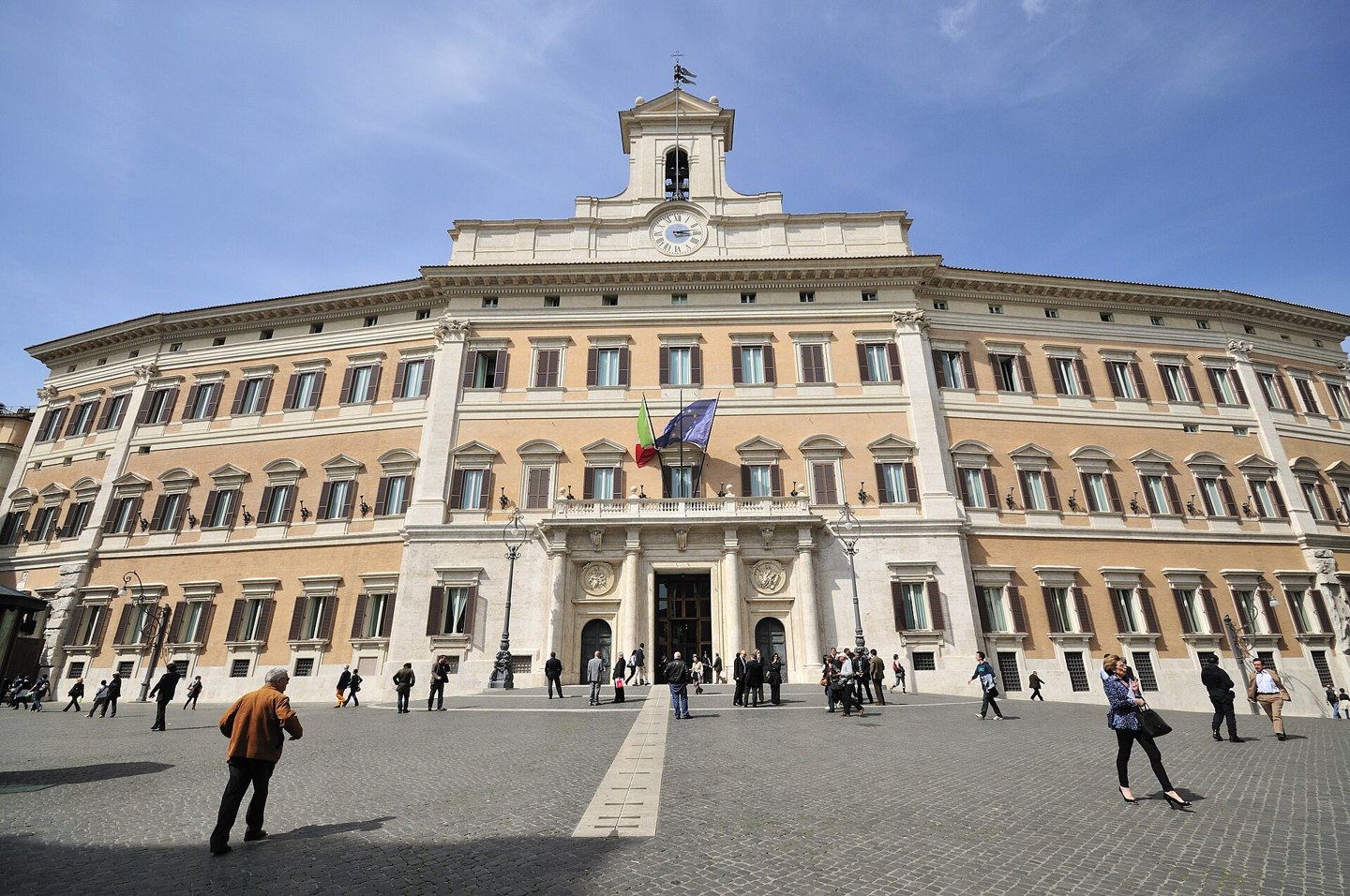
01
Parties, coalitions and parliamentary groups
The Constitution recognises citizens’ right to associate freely in parties and participate democratically in national politics. Parties put forward programmes and candidates; coalitions bring different political forces together for elections. A parliamentary group organises elected members within each house and may include more than one party.
Forces represented in the Chamber include Fratelli d’Italia, Partito Democratico, Movimento 5 Stelle, Forza Italia, Lega, Alleanza Verdi e Sinistra, Azione and Italia Viva. Other political organisations and linguistic minorities are also represented. The Mixed Group includes members outside the other groups. The official Chamber and Senate websites track membership and changes.
Meet the parties and alliances
The profiles summarise each organisation’s documents; political orientations are an editorial overview. Electoral alliances and parliamentary groups may include different parties. The Mixed Group is not a party.
Conservative right
Fratelli d’Italia (FdI)
Emphasises national identity, sovereignty and conservative values. Its documents advocate support for birth rates and families, security and a stronger state. On economic policy, it stresses businesses, Italian production and reducing bureaucracy.
Read the party documentReformist centre-left
Partito Democratico (PD)
Brings together reformist, social-democratic and democratic Catholic traditions. It supports European integration, public services, social and civil rights, and reducing inequality. Its manifesto links economic development with social inclusion and sustainability.
Read the party documentParticipation, social justice and ecology
Movimento 5 Stelle (M5S)
Presents itself as a movement for citizen participation and political renewal. Its principles highlight common goods, integral ecology, social justice, technological innovation and an eco-social market economy. It cannot be reduced to traditional party divisions.
Read the party documentLiberal and popular centre-right
Forza Italia (FI)
Combines economic liberalism, the popular political tradition and Christian references. It supports private enterprise, individual freedom and a market economy alongside solidarity and subsidiarity. Its identity emphasises European integration and Atlantic ties.
Read the party documentRight and territorial autonomy
Lega
Emphasises regional autonomy, security and immigration control. Its programme advocates lower taxes, administrative simplification and support for businesses. Territorial autonomy is an important feature of its political history.
Read the party documentLeft-wing and green alliance
Alleanza Verdi e Sinistra (AVS)
An alliance of Europa Verde and Sinistra Italiana rather than a single party. It connects environmental issues with labour and social policies: ecological transition, public services, tackling insecure employment, civil rights and reducing inequality.
Read the party documentLiberal and reformist centre
Azione
Its manifesto combines social liberalism and the popular political tradition. It prioritises education, healthcare, security and justice, stressing administrative competence and investment in knowledge. It seeks to reconcile growth, sustainability, markets and social justice.
Read the party documentReformist and pro-European centre
Italia Viva (IV)
Its values emphasise individual freedoms, equal opportunities, solidarity and opposing discrimination. It advocates a liberal, secular and inclusive state, valuing merit and the participation of women and young people.
Read the party document02
The Chamber of Deputies and the Senate
Parliament has two houses with equal legislative powers and equal roles in granting confidence to the Government: the Camera dei deputati and the Senato della Repubblica. A bill must be approved in identical wording by both to become law. Both scrutinise the executive.
The Chamber has 400 elected deputies; the Senate has 200 elected senators, alongside the life senators provided for by the Constitution. A parliamentary term normally lasts five years but can end early through dissolution. Citizens can vote for both houses from age 18; candidates must be at least 25 for the Chamber and 40 for the Senate.
Law No. 180 of 9 October 2026, in force since 24 October, reformed national elections: the model is predominantly proportional, with territorial exceptions and separate overseas rules. The list or coalition winning the most votes in both houses may receive a governability bonus if it reaches at least 42% of valid votes in each: 70 seats in the Chamber and 35 in the Senate, subject to statutory limits.
Voters choose a list and may express up to three preferences for candidates other than the list leader, following the rules on candidates of different sexes. Naming a prime-ministerial candidate in an election does not replace appointment by the President of the Republic or parliamentary confidence. Consult the reform and official election instructions for details.
03
Municipalities: mayor and municipal council
In municipal elections, citizens choose the sindaco (mayor) and consiglio comunale (municipal council). The ordinary term is five years. Assessori, members of the municipal executive, are appointed by the mayor.
Under the general national rule, municipalities with up to 15,000 inhabitants elect the mayoral candidate with the most votes. Above that threshold, an absolute majority of valid votes is needed in the first round; otherwise the top two candidates contest a runoff. Special autonomies have their own rules, and specific provisions cover single candidates and ties.
04
Regions, provinces and metropolitan cities
Voters elect regional councils. As a rule, they also directly elect the president of the giunta regionale, informally called the regional governor, who appoints regional assessori. Regional statutes and laws determine the system; exceptions include Valle d’Aosta, where the council elects the president.
In provinces governed by Law 56/2014, the president and provincial council are elected indirectly by mayors and municipal councillors in the territory. In metropolitan cities, the mayor of the main city normally serves as sindaco metropolitano. The autonomous provinces of Trento and Bolzano have special arrangements and directly elected councils. No single electoral rule covers all Italian provinces.
05
President of the Republic and government formation
The President of the Republic is not directly elected by the public. Parliament elects the President in joint session with three delegates per region and one for Valle d’Aosta. Voting is secret: a two-thirds majority of the assembly is required in the first three ballots and an absolute majority from the fourth. The term is seven years.
The President of the Republic appoints the President of the Council of Ministers (prime minister) and, on the latter’s proposal, the ministers. There is therefore no separate popular election for ministers. Following appointment and the oath of office, the Government must appear before both houses within ten days to obtain their confidence. It needs to retain parliamentary support to remain in office.
06
Referendums: when voters decide
An abrogative referendum under Article 75 can repeal a law in whole or in part. It may be requested by 500,000 voters or five regional councils. A majority of eligible voters must participate, and the proposal must win a majority of valid votes. Excluded subjects include tax and budget laws, amnesties and pardons, and laws authorising the ratification of international treaties.
A constitutional referendum under Article 138 may confirm or reject a reform approved without a two-thirds majority of members in each house on the second vote. It may be requested within the constitutional three-month period by one fifth of the members of either house, 500,000 voters or five regional councils. There is no minimum turnout: a majority of valid votes decides. Regional and local referendums follow their own rules.
Photos and places

Palazzo Montecitorio, home of the Chamber of Deputies in Rome.
Credit: Vlad Lesnov · CC BY 3.0 Image resized and compressed; framing adjusted on the page.
Palazzo Madama, home of the Senate of the Republic in Rome.
Credit: Merulana · CC BY-SA 4.0 Image resized and compressed; framing adjusted on the page.Official sources and further reading
Institutional references for checking the information and following updates. Links may open pages in Italian.
- Chamber: how Parliament works
- Chamber: who elects deputies
- Chamber: parliamentary groups
- Senate: parliamentary groups
- Chamber: elections and referendums
- Interior Ministry: municipal election instructions
- Chamber: regional electoral systems and autonomies
- Province of Ravenna: organisation and indirect elections
- Constitution: President of the Republic (Articles 83–91)
- Constitution: Government (Articles 92–100)
- Abrogative referendum: Article 75
- Constitutional referendum: Article 138
- Normattiva: October 2026 electoral reform
- Gazzetta Ufficiale: Law 180/2026 with notes
- Senate: explanation of the 2026 electoral model